Don't look back: Hadestown and The Failure of Solarpunk
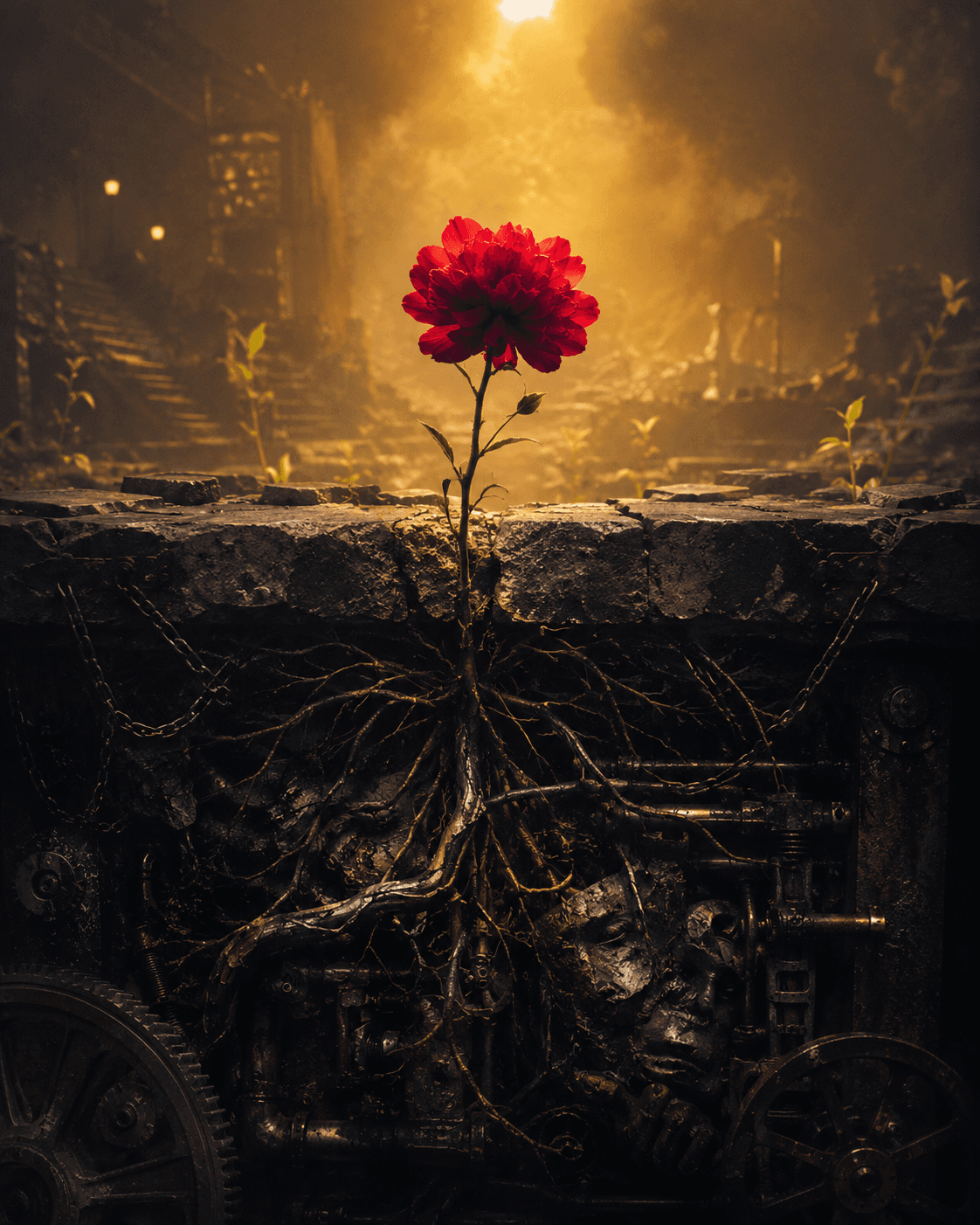
WARNING, WARNING SPOILERS AHEAD
"The meanest dog you'll ever meet
He ain't the hound dog in the street
He bares some teeth and tears some skin
But, brother, that's the worst of him
The dog you really got to dread
Is the one that howls inside your head
It's him whose howling drives men mad
And a mind to its undoing
Wait for me, I'm comin'
Wait, I'm comin' with you
Wait for me, I'm comin' too
I'm comin' too"
We Know the Song Is Sad
You couldn’t imagine the goosebumps I felt seeing the original Broadway cast performance of Hadestown. Now, this was not on Broadway per se, but during their limited five-day movie theater release across the nation, which now seems to have extended a few extra days. I went out of my way and preordered my seats like a theater kid to enjoy this showing, and it was worth it. From Amber Gray’s rendition of Persephone, with her emotionally raw and appropriately drunk personality, to the depths of Hades’ voice, Mr. Patrick Page himself. All cast members, including the chorus, the Fates, Eurydice, Hermes, and Orpheus, did a great job, and the story being tragic is the kiss of death itself.
You see, in the beginning Hermes, our narrator, tells us that the story we are about to watch is sad, then in the end tragedy of course strikes. We were warned. Even though it was sad, we continued to hold onto the hope that maybe something may change, we held onto the hope that good, joy, and prosperity could still be achieved that happy endings do exist, especially after a treacherous journey.
Now, in all honesty, this is my third time in total watching Hadestown. I’ve seen it once in New York, once in Louisville, and now once in Louisville in the movie theater version. Each time there are new audiences, and each time I develop a simmering anticipation for the ending because the response among the crowd is often an audible gasp, some cry, some vocalize disdain, some remain shocked, but everyone has a visceral response.
Now, without revealing too much, bad guys can win, good guys can lose, and life isn’t always fair, but it is still up to you to choose. While I sit there and they restart the show, they tell the song over and over, and they allow hope to once again linger in the air, that maybe it is different this time.
Yet it never is.
What Does Failure Look Like?
I get curious about the state of hope that we have. I once wrote an essay about how we know how to design the apocalypse and emphasize the “cool” aspect of dystopian cities. With so much going on in our world, hope seems to dwindle and doubt lingers, then doubt festers, then doubt manifests, and doubt becomes reality. Oftentimes, my philosophical outlook leans heavily toward a solarpunk-esqe style, and people who see this style of greenery, productive energy, and shared systems often identify it as naive, overly optimistic, and impractical. It could be a reality, though what does failure look like in that type of society? Not a utopia, that will never exist, but a different systematic thought.
Maybe failure looks like a cooperative dissolves because its members stop trusting one another. Maybe failure looks like a regenerative building becomeing too expensive to maintain. Maybe failure looks like a decentralized energy systems fail during extreme weather. Maybe failure looks like residents reject density, collective obligations, or simply do not want to participate. Maybe material shortages force ugly compromises, or technology improves efficiency while reinforcing the same unequal ownership beneath it.
Those are still failures, but they are not necessarily the complete cyberpunk collapse we are so good at imagining. There can be failure within a solarpunk-esque world without complete despair. There can be setbacks, corruption, bad maintenance, bad leadership, bad economics, and still not be the end of the entire philosophy. Not being a reason to give up hope completely. Addressing those failures more clearly may actually strengthen the philosophy for when failure inevitably happens, because when the project fails, the foundation must remain.
Premeditating the Failure of Solarpunk
In Stoic practice, there is a principle called premeditatio malorum, roughly meaning the premeditation of adversity. It is the practice of meditating on or thinking through a negative event beforehand and considering how you would respond to it. Much like knowing that Orpheus and Eurydice will not work out, beforehand you expose yourself through mental imagery to the failure, not to surrender to it, but to prepare yourself to continue afterwards. That is where I feel the solarpunk future is missing something. The ideology leans heavily toward utopia, but does not envision failure appropriately. The marketings great but the standard operating procedures are pretty weak or non existent. When we see cyberpunk and technopunk cities in dystopian worlds, those become the ultimate image of “our” failure, and that fear paralyzes momentum to develop, momentum to act. Though there can be failure within this philosophy without complete despair, and addressing that more honestly may assist the philosophy when failure inevitably arrives.
True Love for Humanity Is Maintaining the Path
Many people within the canons and lore of Hadestown on TikTok and Reddit communicate that Orpheus turned around because he loved his muse (Eurydice) so much that he could not resist seeing her, going as far as to say that to love is to turn around.
I would disagree with many.
Orpheus failed because he doubted, and when he doubted he did not know how to comfortably adjust his strategy. He turned around to confirm that Eurydice was there, thus dooming her to eternity, to never feeling spring or remembering her name, thus delivering the tragedy, thus singing the same song over and over and never reaching the joy, prosperity, and hope that he elevated so high in the beginning. His doubt is what caused the failure, but more specifically, his inability to sit within that doubt without demanding immediate confirmation.
There will be doubt in developing a more humanistic world. Meditating on that doubt, meditating on inevitable failure, could help us continue moving forward even when the comfort of looking behind us is overwhelming. True love here is not the absence of doubt. True love is continuing despite it, moving toward what is good, moving toward what is better, even when you cannot yet see proof walking behind you. True love for humanity is maintaining the path.