We know how to design the apocalypse
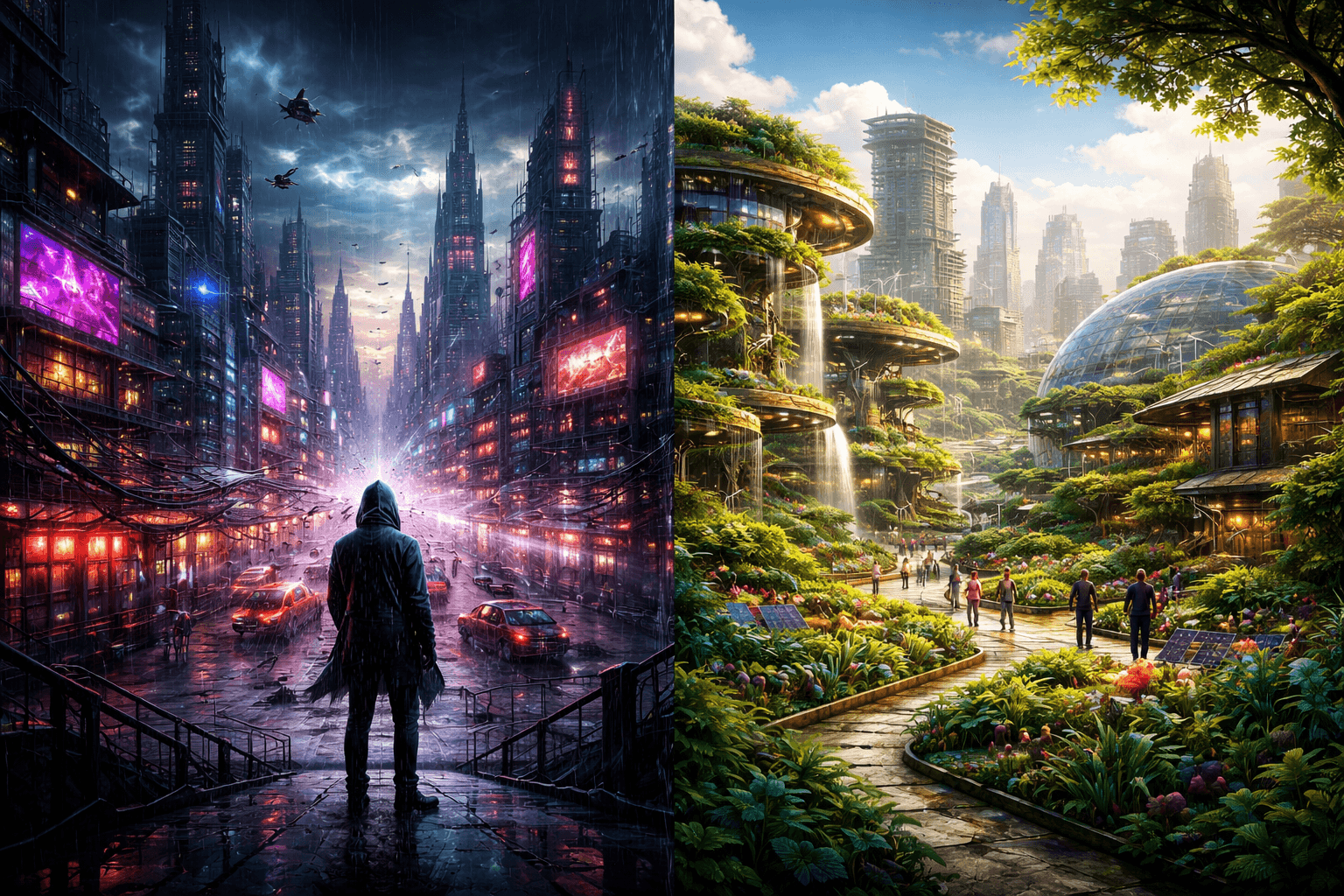
Dystopia Is Easy to Make Cool
So here I sit thinking about the multitudes of films that focus on the future. Dune. What Happened to Monday. The Hunger Games. Divergent. Uglies which was high key trash, no offense. I, Robot. And one thing keeps sticking with me. Beyond the obvious poverty and oppression, the wealthy or dominant parts of these worlds often look incredible.
Take The Hunger Games. I’m actually excited for Sunrise on the Reaping. District One kind of looks like a damn good time. Loud colors, over the top fashion and people eating well. It looks like someone stretched the Kentucky Derby into a civilization. Yes it’s built on exploitation, I get that, but aesthetically it hits. It has a sort of confidence.
Even in Uglies, a society literally built on shallow beauty standards, the skyline looks impressive. If you freeze frame dystopia and ignore the suffering for a second, the architecture often looks kind of fire. Dune gives us monumental scale. Mad Max gives us desert brutality that somehow still feels iconic almost like the vibe you'd get at a modern day Burning Man. It’s harsh but cinematic. Dystopia is very easy to make cool and I don't that that's an accident.
Who Designed These Worlds
What we rarely talk about is how these places were built. Who was the Frank Lloyd Wright of Panem. The Bjarke Ingels of Arrakis. The Zaha Hadid behind those cyberpunk skylines. Because whoever they were, they designed environments that feel powerful. As an audience, if we look past the unfortunate situations the protagonists are stuck in, the environments themselves feel compelling. Brutalist towers and chrome limbs line the skyline full of exuberance which gives these places a sense of identity. Or they have their own individual flavor and culture. They do typically miss something though, greenery. earth, water (you know, Avatar the Last Airbender Elements). All jokes aside though they most importantly miss community that feels alive. Not just crowds but actual interdependence.
Why Solarpunk Feels “Cute”
Solarpunk imagines integrated ecology in the structure of typical life. Shared infrastructure. Abundance without apology. Culturally it gets treated like the kid who brought a compost bin to a sword fight. Nice and well intentioned but slightly naive and a little cringe. There’s a beauty to cynicism in film. Fear carries weight. When collapse is discussed it seems intellectually superior and feels serious. Solarpunk often gets reduced to rooftop gardens and soft lighting. It rarely gets the same narrative, gravity or budget. It gets vibe and maybe a pinterest board. With the news constantly feeding us catastrophe, hope-core feels like a snack instead of a meal. It’s pleasant but not enough. Fear on the other hand is a conversation starter, and ender. So the aesthetic question becomes real. Why does dystopia look mature and regeneration look juvenile?
The Primitive Brain Might Be Running the Show
Maybe this goes deeper than genre. Maybe it taps something older in us. The part of our brain that expects struggle. That equates danger with meaning. Our ancestors survived brutal environments. So mayve stories about surviving brutal environments feel familiar. An authoritarian regime gives us a script. You are either oppressed or rebellious. Black and white, clear roles and a clearer conflict. It’s easier to imagine fighting than collaborating at scale. It’s more dramatic to hoard and ration than to distribute and regenerate. When I think of dystopia, I see the individual guarding what’s theirs. When I think of solarpunk, I see the collective asking how they can build something that lasts. Stability does not trend as well as collapse.
Survival of the Friendliest Is Not as Sexy
We love saying survival of the fittest as if that means the toughest wins. Dystopian films lean into that energy. Only the hardened survive. That creates a kind of heroism. You against the world. But history complicates that narrative.
If brute strength decided everything, Neanderthals might still dominate. They were physically stronger. Built for harsh conditions. Yet Homo sapiens became dominant. How does a weak, small insignificant animal win in that environment? It has to play nice and ask and reciprocate help. We built larger networks. We shared information. We survived because we could function together.
That idea is explored in Survival of the Friendliest. We made it because we needed each other. That is less cinematic than a lone warrior walking through a wasteland, but it’s more accurate. Friendliness does not explode in slow motion. Cooperation does not get a dramatic soundtrack. Hope does not look as cool as chrome armor. And yet hope is dangerous. Even President Snow understood that. Hope unites people. That’s why it has to be controlled.
So Where Is Solarpunk
Maybe solarpunk feels less cool because it does not center individual dominance and instead centers networks. It does not glorify hoarding it imagines distribution. It does not romanticize surviving at the edge of collapse. Dystopia flatters the ego by telling us we could be the exceptional one. The survivor. Solarpunk asks us to trust the commons and emphasizes that we are all just statistics on the grand scale. That is a different fantasy, and not a very "marketable" one. Knowing you're just another number, not special but thats okay because individually we're not special collectively we are.
We say we want abundance, but we keep funding scarcity aesthetics. We keep building technopunk aestetics instead of green cities. We keep romanticizing collapse instead of investing narrative seriousness into regeneration. Maybe the real issue is not that solarpunk lacks aesthetic power. Maybe it’s that imagining a future where survival is no longer the main storyline feels foreign to us, maybe we as humans like being the underdog. That may say more about us than anything.